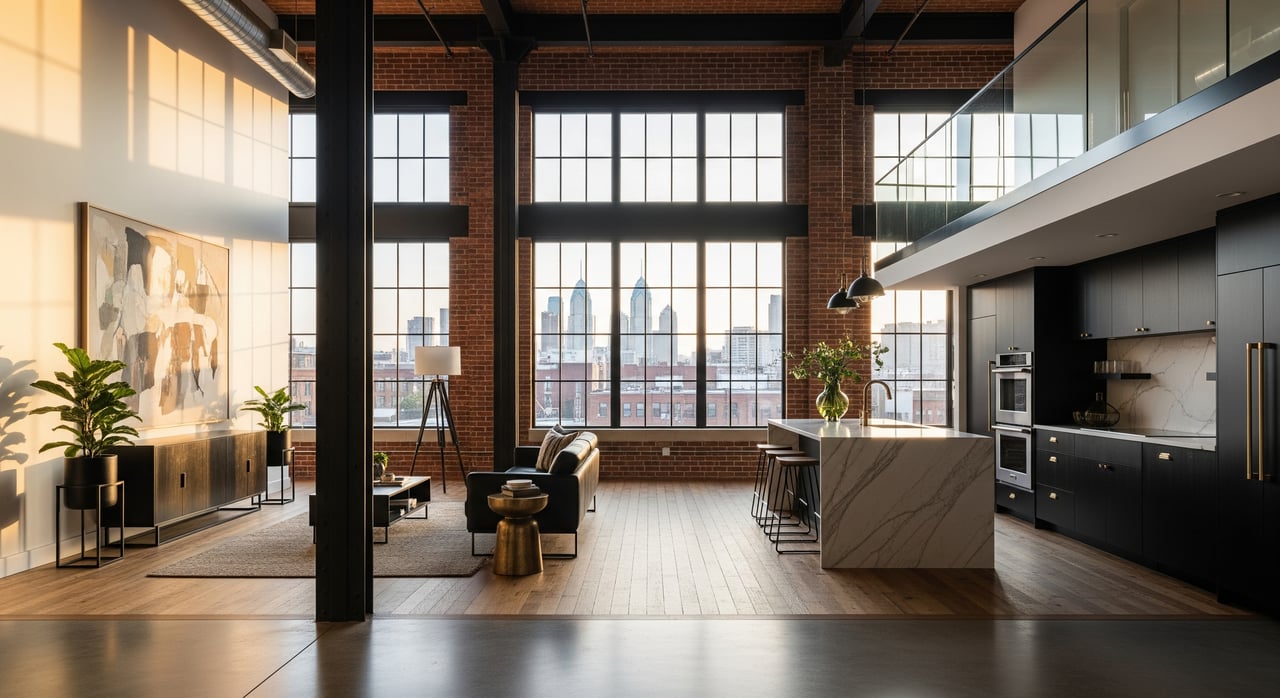
Craving light, volume, and character you cannot find in a standard condo? If the look of exposed brick, steel, and historic windows speaks to you, Callowhill’s Loft District should be on your shortlist. You might be weighing Old City charm or Northern Liberties buzz, but you want the real story on loft layouts, HOA realities, and what day‑to‑day life feels like here. In this guide, you will learn what to expect from Callowhill loft buildings, how to evaluate floorplans and associations, and which lifestyle factors matter before you make an offer. Let’s dive in.
Why Callowhill for loft living
Callowhill is Philadelphia’s Loft District, shaped by former factories and printing houses converted into residential homes. The neighborhood’s identity centers on adaptive reuse, with industrial features that design‑minded buyers seek.
Compared with nearby areas, Callowhill feels more industrial than Old City’s colonial fabric and more focused on large warehouse conversions than the smaller infill common in Northern Liberties. Spring Garden and Logan Square lean more residential and institutional, while Chinatown and Mid‑City are denser and more commerce oriented. If you want wide open spaces and authentic industrial character near Center City, Callowhill aligns well.
Loft architecture and building types
Early warehouse conversions
Many of Callowhill’s hallmark properties began as printing plants or warehouses. Expect cast‑iron, brick, or heavy masonry structures with original industrial bones preserved. These conversions often deliver soaring ceilings, large window banks, and open floorplates.
Boutique conversions and live‑work
Smaller buildings converted into a handful of units can preserve distinctive details and offer a quieter feel. Some properties are live‑work or mixed‑use, with ground‑floor studios or commercial spaces and residential lofts above. These can introduce additional rules and cost sharing across residential and commercial components.
New construction loft‑style
You will also find newer buildings designed to mimic the loft aesthetic. They often include high ceilings and exposed ductwork paired with modern systems, elevators, and amenities. The feel may be more polished than raw industrial conversions.
Floorplans you will see
Open studio lofts
These are generous single rooms with a separate bath. Owners often use sliding panels, bookcases, or furniture groupings to define sleeping zones. They are great for flexible living but offer limited acoustic privacy.
One‑bedroom and mezzanines
Many one‑bedroom lofts use partitions or mezzanines to carve out a sleeping area while keeping the living zone open. Mezzanines give drama and volume but can limit privacy and natural light to the interior.
Duplex and full‑floor homes
Some conversions deliver two‑level layouts with sleeping areas upstairs, or large full‑floor residences with 2 to 4 bedrooms. Even in multi‑bedroom plans, the aesthetic often remains open and airy.
Layout tradeoffs to evaluate
- Openness looks and feels great, but acoustic privacy can be a challenge.
- Mezzanine bedrooms may lack full doors or complete separation.
- Light is abundant at the window wall while interior zones can read darker. Interior glazing and layered lighting help.
Privacy, light, and acoustics
If you love the loft look but want quieter sleeping, prioritize units with enclosed bedrooms or true duplex layouts. For open plans, consider soft materials, acoustic panels, or area rugs to temper sound. Pay attention to window orientation and the depth of the floorplate. Large central areas often need thoughtful lighting and glass partitions to pull daylight inward.
Ownership and HOA basics
Condo structures and mixed‑use
Condominium ownership is common, though some buildings are rental only and co‑ops are less common. In live‑work or mixed‑use properties, residential units may share a master association with commercial components. This structure influences assessments, insurance, and governance.
What HOA fees often cover
In loft conversions, common expenses typically include exterior maintenance such as masonry and roof work, elevator service, common HVAC or boiler systems where applicable, window maintenance, pest control, snow removal, and liability insurance. Confirm exactly what your fee covers, including whether water, gas, heat, or internet are included.
Reserves and special assessments
Older buildings can carry higher ongoing maintenance needs. Reserve funds are sometimes underbuilt and special assessments for façade work, roof replacement, or mechanical upgrades are not unusual. Ask for the reserve study and the last 3 to 5 years of financials to understand upcoming projects and past assessments.
Financing and insurance
FHA and VA approval
Some condo projects, especially smaller or mixed‑use conversions, may not be FHA or VA approved. If you need government‑insured financing, verify project approval status early to avoid surprises.
Conventional lending review
Conventional lenders often look closely at reserves, owner‑occupancy ratios, and the mix of commercial and residential components. Your loan approval can hinge on these building factors, not just your personal profile.
Insurance scope and building age
Flat roofs, older masonry, and large window systems require attention. Clarify what the building’s master policy covers versus your individual policy. Ask whether you need walls‑in coverage or full‑value coverage and get quotes that reflect the building’s age and envelope condition.
Due diligence checklist
Use this as a working list when you evaluate a unit and its building:
- Confirm zoning and use for the unit and whether the project includes commercial components.
- Request HOA financials including the current budget, the reserve study, and the last 3 to 5 years of meeting minutes.
- Ask about capital plans for roof, façade, elevator, windows, and common mechanical systems.
- Verify FHA/VA status if you need those financing options.
- Confirm rental policies including short‑term rental restrictions and subletting rules.
- Obtain recent building inspection reports and schedule your own inspections, especially for structural components, roof, HVAC, electrical load, moisture and indoor air quality. For buildings that predate 1978, discuss lead paint and asbestos surveys with your inspector.
- Clarify insurance coverage and obtain quotes based on the building’s age and systems.
- Check parking arrangements and costs if a deeded space is not included.
- Review elevator service history and ask about planned major repairs.
- Visit at different times to assess light, noise, and nearby commercial activity.
Lifestyle, dining, and arts
Callowhill attracts creatives who value studio space and proximity to galleries, small studios, and creative offices. You are close to larger arts destinations in Center City and Old City. Ground‑floor retail skews independent, with cafés and casual dining dotted across the district and more concentrated options a short walk away in Old City and Northern Liberties. If you enjoy an urban, design‑forward environment with a local maker energy, the neighborhood aligns well.
Mobility, transit, and parking
Callowhill is a walkable urban district with access to bus routes, subway service along the Market Street corridor, and regional rail hubs within easy reach. Bike commuting is common and secure bike storage inside buildings is a valuable amenity to look for.
Parking is limited in many conversions. Not every unit includes a deeded space and nearby garage parking typically commands a premium. If you have a car, budget for monthly parking or prioritize listings with deeded or assigned spaces.
Safety and site visits
Urban conditions vary block by block. Lighting, sidewalks, and street activity can change within a few streets. Visit a property at multiple times of day and consult local community resources as part of your due diligence.
Is a Callowhill loft right for you?
Choose Callowhill if authentic industrial character, high ceilings, and open volume top your wish list. Expect to balance that beauty with practical questions about HOA strength, maintenance planning, and privacy. With careful due diligence and a clear read on financing and insurance, you can secure a loft that satisfies both your design aims and your daily needs.
If you want a more tailored search or a second set of eyes on building health and HOA documents, connect with Franz Rabauer for senior‑level guidance and a curated shortlist that fits your goals.
FAQs
What makes Callowhill different from other Center City areas?
- Callowhill emphasizes authentic industrial lofts with large windows and open floorplates, while nearby neighborhoods lean more historic, residential, or new‑construction focused.
How private are bedrooms in typical Callowhill lofts?
- Many lofts use open plans or mezzanines, so sleeping areas may lack full doors and acoustic separation; enclosed bedrooms or duplex layouts offer more privacy.
What HOA costs should I expect in a loft conversion?
- Associations often cover exterior maintenance, roof, elevators, common mechanicals, window upkeep, pest control, snow removal, and liability insurance; verify exact inclusions.
How common are special assessments in older loft buildings?
- Older conversions can face major projects like façade or roof work, so special assessments do occur; review the reserve study and 3 to 5 years of financials to understand risk.
Can I use FHA or VA financing for a Callowhill condo?
- Some projects are not FHA or VA approved, particularly small or mixed‑use buildings; confirm project approval status early in your loan process.
Is parking typically included with Callowhill lofts?
- Many units do not include deeded parking and nearby garage spaces often cost extra; verify availability and budget accordingly.
Are short‑term rentals allowed in Callowhill loft buildings?
- Policies vary by association and local regulation; review the condo’s rental rules and any short‑term restrictions before you buy.
Will there be noise from commercial tenants in mixed‑use buildings?
- Mixed‑use settings can introduce daytime loading or evening activity; visit at different times and ask the HOA about any noise concerns and operating hours.